

By William (for wheezingaway.com)
(A person without good breathing is a person with a life of constant caution.)
Living with a chronic illness means learning never stops.
My own battles with severe asthma, Stage III COPD, fatigue, anxiety, and chronic heart condition, all require constant education so I can understand what I am facing and how to work with it rather than against it.
This six-part ‘Gaining Stability’ series has explored the daily anchors that help bring steadiness to a life touched by chronic illness, those being: exercise, avoiding sickness, sleep and rest, knowing yourself, social contact, and now – NUTRITION!
WHY NUTRITION MATTERS SO MUCH
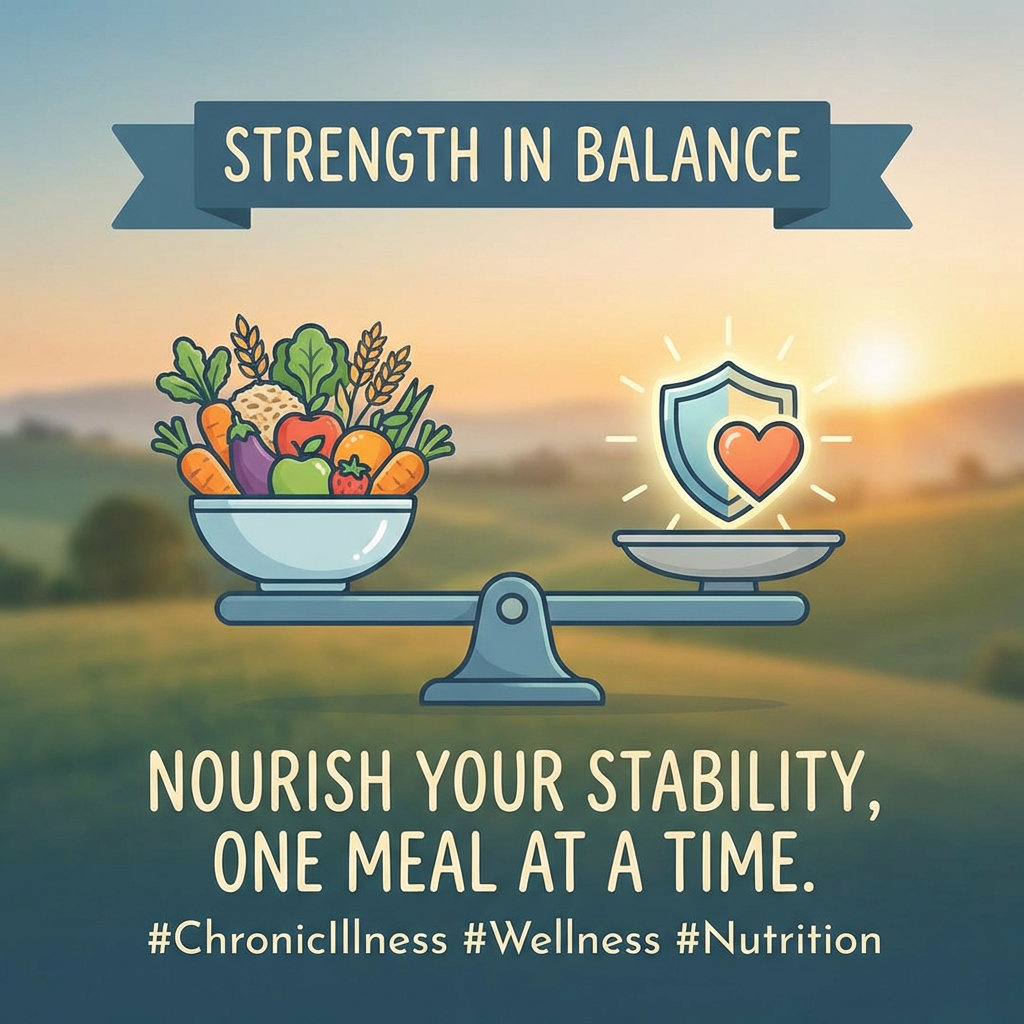
Nutrition could be the most important of the six anchors because it fuels every system of the human body.
We must not just think that feeding on anything will work, because as most of you that battle a chronic illness already know – it does not work like that at all!!
No, we must remember to constantly keep track of our eating habits to make sure we are eating not only enough food to keep the body working properly, but more importantly are you eating the right foods.
What we eat and drink each day determines how well our body can function, recover, and support us through the unpredictable challenges of chronic illness.
But eating ‘enough’ isn’t the goal – eating ‘the right things’ is.
Our bodies run best on a balanced mix of proteins, vitamins, and carbohydrates stemming from fruits, vegetables, lean meats, and dairy.
For many of us with chronic illnesses, nutrition becomes even more individualized:
……Lung issues often require cutting back on sugars and dairy because they can increase phlegm.
……Diabetes or weight concerns may require watching carbohydrate intake.
……Heart conditions demand close attention to sodium intake.
While some people will also use supplements – multivitamins, B-Complex, garlic, fish oils, and more – these should always be cleared with your physician and/or specialist.
THE INDIVIDUAL CHALLENGE
Eating well is deeply personal. What works for one person may not work for another, even if they share the same diagnosis.
That is why with any diet or nutritional plan you should consider having it reviewed with your doctor and/or specialist to ensure it supports your health rather than possible triggering symptoms.
NUTRITION is something we all must do to survive – which means it is something we must learn to do wisely if we want stability in our daily lives with chronic illness and/or disability.
THIS REFLECTION HAS QUESTIONS:
What eating and drinking habits help you maintain stability in your daily life with chronic illness?
Has your physician and/or specialist given you a nutrition plan to help reduce triggers or danger related to your condition(s)?
Be sure to share your reflections or comments with wheezingaway.com, so that others can learn from your journey or travels with a chronic illness and/or disability.
If you are looking for more on nutrition, be sure to follow or revisit the website wheezingaway.com as they are working on a nine-part series dealing with Chronic Illness and Nutrition, to be up soon.
AS ALWAYS – stay alert, stay educated, and stay hopeful.
REMEMBER – (because the write fights COPD) if breathing symptoms linger or disrupt daily life, please make the time to talk with a physician and/or specialist.
Smiles, Prayers, Blessings, and Steady Breathing – Shalom!!
NOTES: Sometimes we share what may seem like medical information, but we are only giving descriptions and highlights of various aspects of living with a chronic illness and/or disease, and in no way do we ever want our information to be considered medical advice. If you have questions about what we have posted, then ask your physician and/or medical specialist about it.
(Copyright@2026, by CrossDove Writer for wheezingaway.com – no part of this write may be used or copied without written permission.)
 DISABILITIES DAILY