

A-to-Z = CARPEL TUNNEL SYNDROME
By William (for wheezingaway.com)
Living with a chronic illness like COPD or severe Asthma means your body is already working overtime. Over the years, that constant strain can open the door to other health issues – some are subtle, some are disruptive. That is why staying informed matters.
Today’s Language of Chronic Illnesses, A-to-Z topic is: CARPAL TUNNEL SYNDROME, often referred to simply as ‘CTS’.
WHAT IS CARPAL TUNNEL SYNDROME?
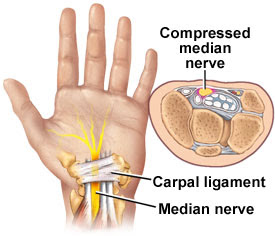
CTS occurs when the median nerve (the nerve that runs through a narrow passageway in the wrist called the ‘carpal tunnel’) becomes compressed or irritated.
As explained by most medical folks, CTS will affect a person’s use of hand, fingers, and wrist due to the inflammation or irritation of the median nerve!!
While repetitive motions like typing are often blamed, those repetitive motions are only one piece of the CTS puzzle. Many factors can contribute to getting CTS, including:
….. Heredity
….. Natural size of the carpal tunnel
….. Age related changes
….. Certain medical conditions
….. Long-term habits or strains
In many cases, CTS develops over time rather than just from one specific event or motion.
WHAT ARE COMMON SYMPTONS OF CTS?
CTS often begins subtly, especially at night. Among some hallmark signs would be:
…… Numbness, tingling, burning, or pain in the thumb, index, middle, or ring finger.
…… Shock like sensations that radiate into the fingers.
…… Tingling or pain that travels up the forearm.
…… Weakness or clumsiness when gripping objects.
…… Difficulty holding tools, pens, and/or utensils.
These are all symptoms that may come and go at first before becoming more persistent if untreated.
NON-SURGICAL TREATMENT OPTIONS:
Many mild to moderate cases can be managed without surgery. Such things as wearing a splint, using anti-inflammatory drugs, exercise and corticosteroids may help reduce symptoms.
COMMON NON-SURGICAL APPROACHES:
Several non-surgical approaches may be used or tires, especially at night, including =
…… Wrist Splints, normally worn at night.
…… Cold Compresses – worn 10-15 minutes at a time to help with reducing any swelling.
…… Anti-inflammatory medications – some over-the-counter options may help with discomfort.
…… Activity Modification – to help reduce the stain on the wrist area.
Other therapies such as ultrasound, yoga, lasers, or vitamin B6 injections have shown limited evidence for effectiveness at this time.
WHEN SURGERY BECOMES THE OPTION:
If symptoms persist, if weakness develops, or if splinting and other measures no longer seem to help – then surgery may be recommended.
Severe cases may require a ‘carpal tunnel release’ where a surgeon cuts the transverse carpal ligament to relieve pressure on the median nerve.
Most carpal tunnel surgeries can be performed with local, regional, or general anesthesia, depending on the situation.
WHY EARLY ATTENTION MATTERS:
Hand function affects nearly every part of daily life. Ignoring symptoms can lead to long-term nerve damage, so it is important to talk with your physician if symptoms persist or worsen.
Please BE AWARE – if you or anyone you know have any symptoms that linger and begin to agitate daily living – then please see or talk with your physician and ask questions while being honest about the symptoms.
CTS is highly treatable – and in many cases, fully manageable when addressed early!!
That folks is a quick grip on ‘Carpal Tunnel Syndrome’ as our Language of Chronic Illnesses A-to-Z!!
With that we big you Good Day, Good prayers & blessings, and good breathing – William
(copyright@2026 by CrossDove Writers for wheezingaway.com = no part of this write may be printed, copied, or used without written permission from CrossDove Writers)
NOTE TO REMEMBER = We give descriptions and highlights of medical issues for those with chronic illnesses. Not in any way do we want our information to be considered medical treatment or solutions. Always consult a physician and/or medical specialist for more clear medical founded information.
 DISABILITIES DAILY